Dry Fire Training: Stay Sharp Without Burning Through Your Ammo Supply
Dry fire training has evolved far beyond simple trigger presses and reload drills.

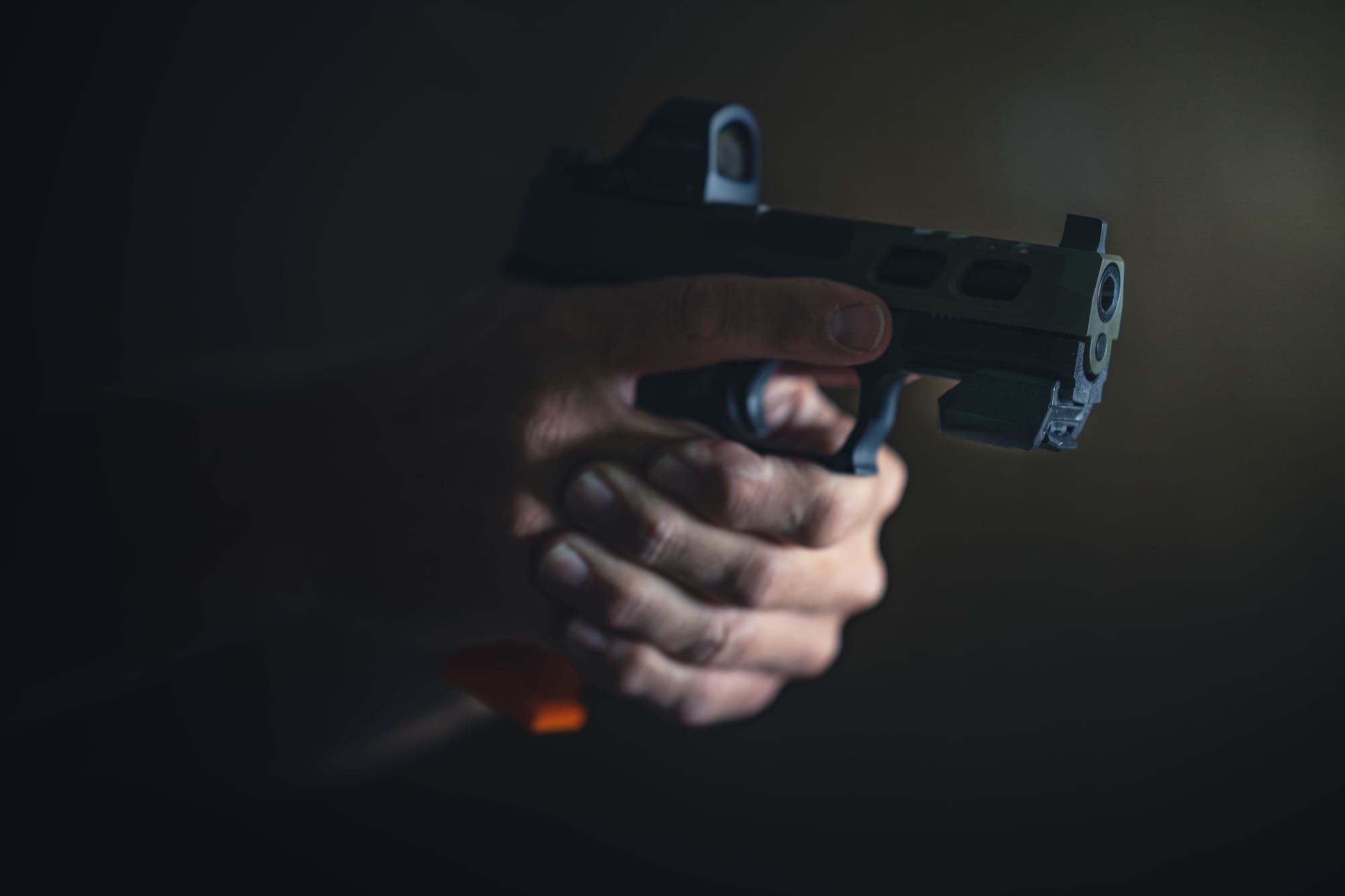
Ammo ain't cheap these days, and range time isn't always convenient. Most shooters don't get to train as often as they'd like.
The good news, though, is we aren't without options. Thanks to advances in firearms technology, dry fire training can sometimes be just as fun and effective as live fire. Okay, that’s a bit of a stretch… but you get my point.
Dry fire techniques have changed dramatically, and many modern dry fire systems have made at-home practice both measurable and surprisingly effective.
And in a market where ammunition prices continue to fluctuate and supply remains unpredictable, dry fire has become more than just a training tool. It's also one of the smartest ways to manage your long-term ammo consumption and build a realistic stockpile plan.
Because once you start tracking your training consistently, you stop guessing how much ammo you actually need.
Modern Dry Fire
Traditional dry fire still works. Presentation drills, trigger presses, reloads, and target transitions are all fundamentals that matter whether or not there's a live round in the chamber.
But modern systems like the Mantis X and Mantis Laser Academy have taken things several steps further.
Instead of simply charging and pulling, shooters can now measure performance in real time. Trigger movement, draw consistency, muzzle deviation, split times, follow-up shots, and presentation speed can all be tracked through an app or laser-based feedback system.
That changes the experience completely.
Suddenly, dry fire becomes structured instead of random. You're collecting data, identifying weaknesses, and, ideally, working out any bad habits you may have picked up along the way.
Repetition Builds Skill
One of the biggest misconceptions in shooting is that skill only improves during live fire. Live fire validates performance, but repetition builds it.
Think about how much time most people actually spend shooting each month. Maybe one or two trips to the range, if life and schedules cooperate. That's not a criticism; it's just the reality for a lot of us these days.
Dry fire, though, fills the gaps between those sessions.
Ten to fifteen minutes a few nights a week can dramatically improve your draw speed, trigger control, movement mechanics, and grip consistency.
The beauty of dry fire is that it removes distractions. There's no recoil anticipation, no noise, and no pressure to conserve ammo because every trigger press costs money.
You can isolate mechanics and refine them repeatedly until they become automatic.
Then, when you transition back to live fire, your range sessions become more productive because you're confirming skills instead of relearning them.
Dry Fire Saves Ammo
The obvious advantage is reduced ammunition consumption, which translates to more cash in your pocket.
Through dry fire, I can supplement live fire with structured dry fire can maintain proficiency while firing fewer rounds overall. That matters in today's market, especially considering we’re still navigating our way out of yet another ammo shortage.
But there's another advantage that often gets overlooked: predictability.
Dry fire helps you understand your actual training habits.
Most shooters estimate their ammo usage emotionally rather than practically. They buy out of fear of shortages or vague notions of "having enough.” The problem, then, is that "enough" means different things to different people.
Once your training becomes structured, your ammo planning becomes structured too.
Your Training Schedule Should Define Your Stockpile
This is where dry fire and AmmoSquared naturally complement each other.
Every shooter has a live-fire routine, whether they realize it or not. Maybe you shoot 200 rounds of 9mm every range trip. Maybe you train twice a month. Maybe your rifle gets 300 rounds quarterly, while your carry pistol gets consistent weekly practice.
Dry fire helps quantify that routine.
When you know how often you train, how many rounds you typically fire, and so on, you can start building an ammo reserve based on actual usage instead of panic buying.
That's a huge difference.
Instead of asking, "How much ammo should I have?" the question becomes, "How much ammo do I realistically consume over six months or a year?" Which, I think, is a far more useful metric.
None of this means live fire becomes unnecessary.
You still need recoil management. You still need to confirm accuracy under recoil, test defensive ammunition, and validate performance on the range. Dry fire can't completely replace that, obviously.
It can, however, dramatically improve the efficiency of your live-fire sessions. That balance of efficiency matters financially, too.
The AmmoSquared Principle
The reality is that ammo prices and availability will likely remain volatile for the foreseeable future. Global conflicts, manufacturing bottlenecks, and raw material shortages aren't going away anytime soon.
One of the biggest benefits of the AmmoSquared platform is consistency. Rather than trying to time the market or panic-buy during shortages, you gradually build inventory over time.
Dry fire supports that mindset perfectly.
Once you understand your real-world training cadence, you can set realistic acquisition goals. If your annual training plan realistically consumes 4,000 rounds of 9mm, that gives you a measurable baseline for your reserve.
If you want a one-year cushion, you know the target. If you increase live-fire frequency, you can adjust accordingly. That level of clarity removes a lot of uncertainty from ammo ownership.
Instead of reacting emotionally to shortages, you start planning around actual consumption and actual training goals. And in the end, the shooters who stay sharp aren't necessarily the ones shooting the most ammo. They're the ones who train consistently, track their habits, and prepare ahead of time.