
Fundamentals: Putting It All Together
In our final installment, we bring all the fundamentals together, exploring how individual skills work as one. Because progress isn't about simply going faster; it's about intentional practice, consistency, and never outgrowing the basics.

Fundamentals Series — Part 11
Over the past ten articles, we've broken down many of the foundational skills that contribute to effective practical shooting. We've discussed grip, trigger control, cadence, vision, movement, and positioning, examining how each skill influences our ability to perform.
We've spent considerable time looking at these fundamentals individually, but there's an important reality we need to recognize as we conclude this series: in practical shooting, these skills rarely operate independently.
Each component influences the others.
Understanding these relationships is what allows us to move beyond simply performing individual skills and begin applying them together.
The Problem We Commonly See
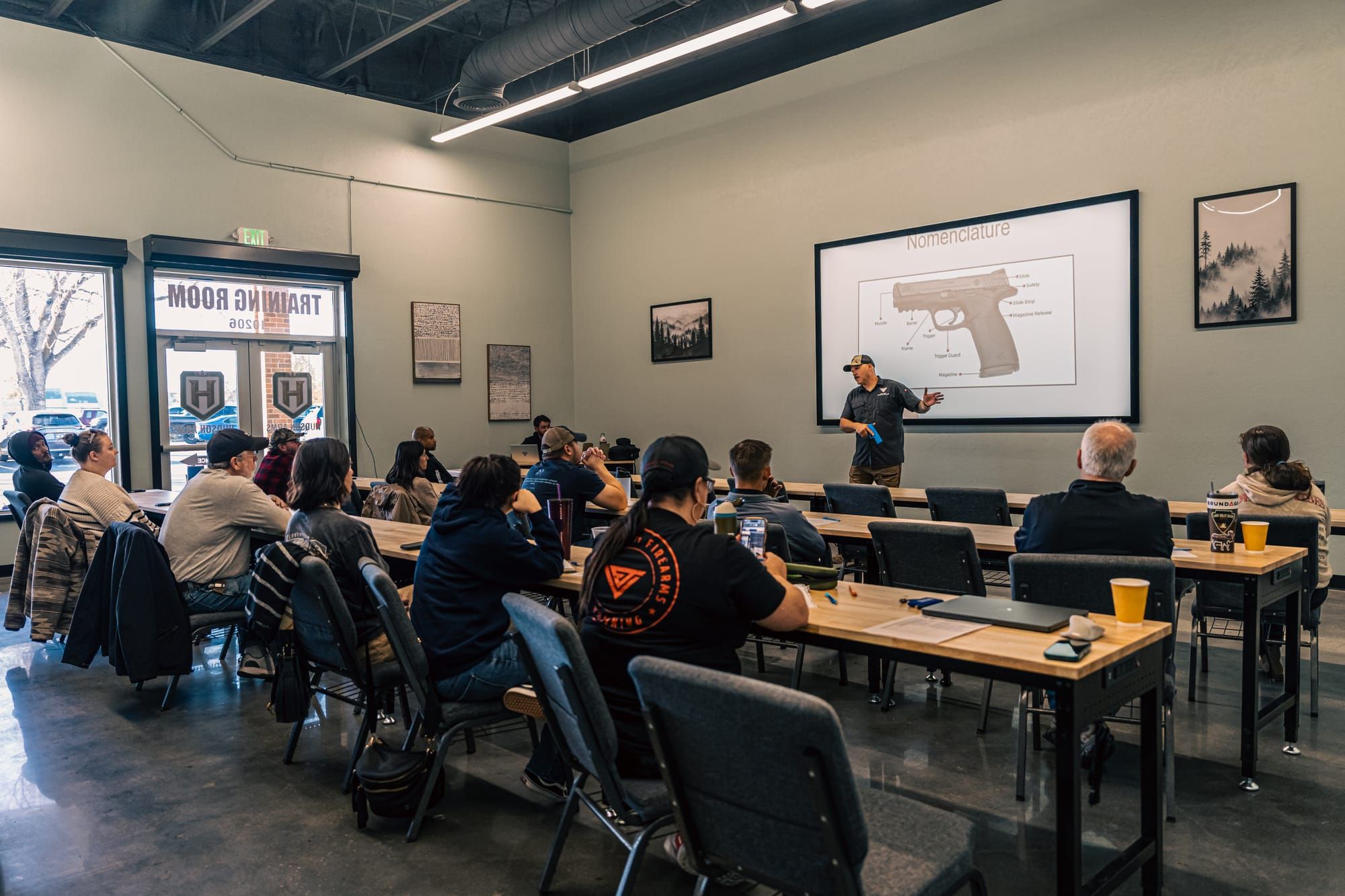
One of the most common things we observe at Valiance Firearms Training (VFT) is students who demonstrate solid shooting fundamentals during isolated exercises but struggle when additional demands are introduced.
A student may demonstrate excellent accuracy during a stationary drill, only to experience significant deterioration when asked to move between positions. Another may maintain consistent cadence on a single target but struggle to apply that same visual discipline when transitioning between multiple targets.
The fundamentals haven't changed, but the demands placed on the student have.
When we introduce movement, multiple targets, changes in distance, or positional challenges, we're asking the student to manage several tasks simultaneously. Skills that appeared well developed in isolation may not yet be sufficiently established to hold up under those added demands.
It doesn't necessarily mean the student doesn't understand the fundamentals. It may mean those skills haven't been developed to the point where they can be applied consistently while attention is divided.
And that's precisely why we train.
The Tip: Integration, Not Replacement
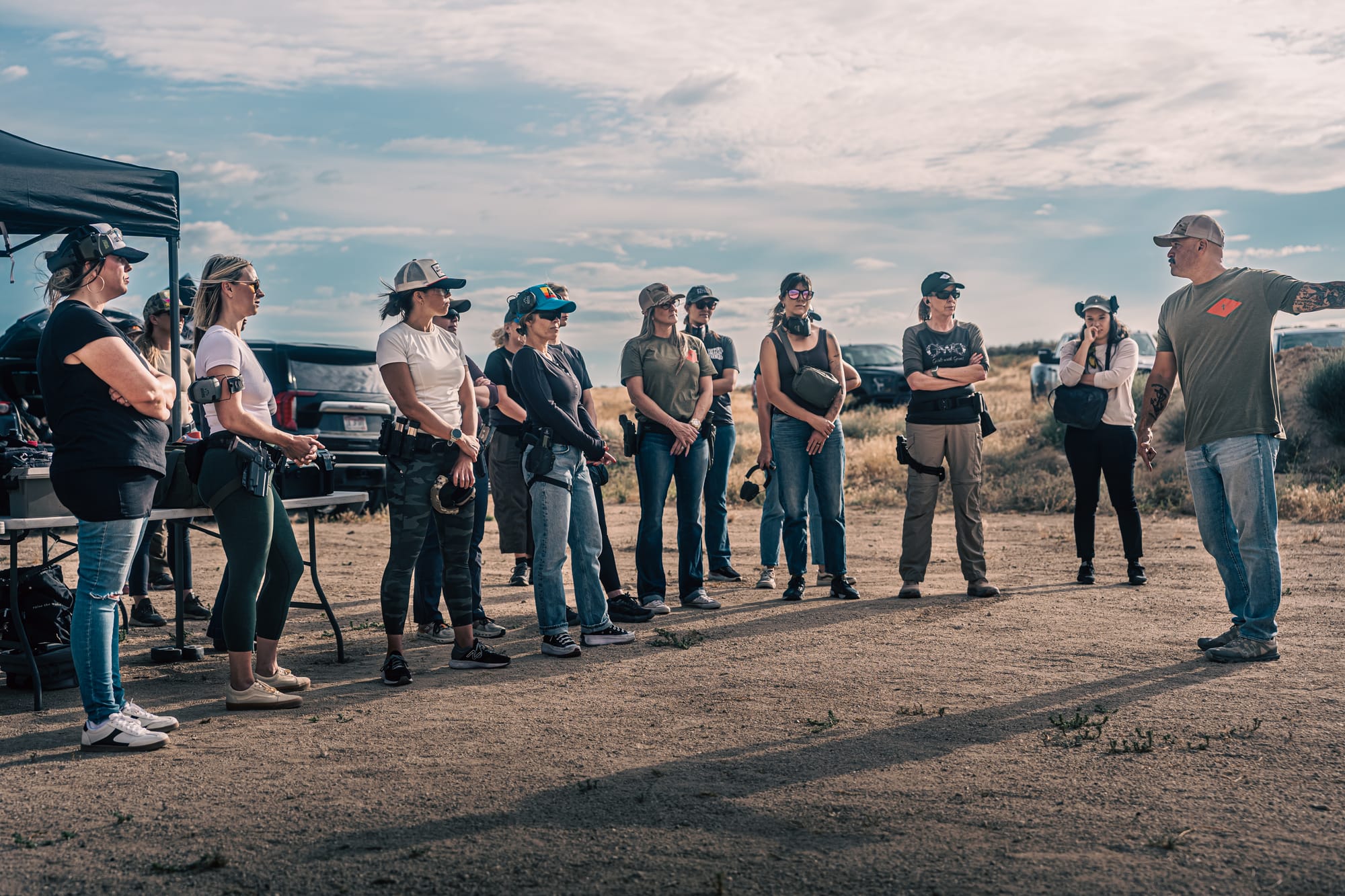
There's a common tendency to think of training as a progression from basic skills to advanced skills, as though we eventually graduate from the fundamentals and move on to something entirely different.
But effective practical shooting doesn't replace the fundamentals. It demands that we apply them in more challenging circumstances.
Consider everything that happens during a relatively simple course of fire.
Before the first shot, our vision is already gathering information. Our grip establishes control of the gun, and our trigger manipulation must support the level of accuracy required. As we transition between targets, our eyes lead the process, while cadence changes according to the difficulty of each shot.
Introduce movement, and now we must maintain those same principles while managing our body position, balance, and momentum.
None of these skills disappears when another is introduced.
They must work together.
The objective of progressive training is to develop each fundamental sufficiently that we can apply it without allowing the additional demands of the exercise to compromise our performance.
That doesn't happen simply by making every drill faster or more complicated. It happens through intentional repetition, appropriate progression, and honest evaluation.
Complexity Reveals Weaknesses
One of the greatest benefits of combining fundamentals is that it exposes areas that need additional attention.
When students struggle during a complex exercise, the natural response is often to repeat the entire drill until they achieve a better result.
Sometimes that's appropriate. But we also need to understand why the performance suffered.
Was the student rushing their trigger manipulation? Did their grip deteriorate during movement? Were their eyes late identifying the next target? Did they arrive at a shooting position off balance and spend unnecessary time recovering?
These are very different problems, and each deserves a different training response.
This is why we encourage students to evaluate their performance beyond the final time on the shot timer.
A faster run doesn't necessarily indicate better execution, just as a slower run doesn't automatically mean the fundamentals were applied more effectively.
We need to look at what happened during the exercise.
When we can identify the specific skill that is limiting our performance, we can isolate it, improve it, and then reintroduce it into a more demanding environment.
That process is how we turn weaknesses into strengths.
Drill Highlight: Build, Combine, Evaluate
For this final installment, rather than introducing another specific drill, I want to emphasize an approach we regularly use at VFT: building training exercises that progressively combine fundamentals.
Start with a manageable exercise that allows you to focus on one or two skills. Establish a baseline for acceptable accuracy, control, and consistency.
Once those skills are being performed reliably, introduce an additional demand. That might mean incorporating target transitions, movement, or a change in shooting position.
As the exercise becomes more complex, evaluate whether the original fundamentals remain intact.
If performance begins to deteriorate, resist the temptation to simply push harder through the same exercise. Identify what changed and determine whether a particular skill needs additional attention.
Sometimes the most productive thing we can do is return to a simpler drill and reinforce the specific fundamental that's holding us back.
Then build again.
This approach allows us to introduce complexity with a purpose rather than adding difficulty simply for the sake of making training harder.
The goal is not to create the most complicated course of fire possible. It's to develop students who can consistently apply sound fundamentals across a wide variety of shooting problems.
Fundamentals Are Never Outgrown
There's something worth remembering as we bring this series to a close.
Experience doesn't eliminate the need to practice fundamentals.
In fact, the more demanding our training becomes, the more important those fundamentals are.
Experienced shooters still work on their grip. They still refine their trigger manipulation, evaluate their visual discipline, and look for inefficiencies in their movement.
The difference is often found in their ability to recognize small errors, understand their causes, and make meaningful corrections.
That level of awareness is developed through consistent, deliberate training.
We should never reach a point where we believe we're too advanced to revisit the basics. Those foundational skills are what allow us to perform effectively when the demands increase.
And as our abilities improve, our standards should improve with them.
The Bigger Picture
When we began this series, our objective was to break down the fundamentals of practical shooting into principles that students could understand, practice, and continually improve.
We've covered a lot of ground, but the underlying message has remained consistent.
Effective shooting isn't the result of one particular technique, one impressive drill, or one exceptionally fast performance.
It's the product of well-developed fundamentals, applied consistently and refined over time.
At VFT, we want students who understand not only how to perform a skill, but why it matters, how it connects to other skills, and how to recognize when something needs improvement.
That understanding creates a foundation for continued growth.
The fundamentals aren't something we leave behind as we become more capable. They're what make that capability possible.
As we conclude the Fundamentals Series, I encourage you to revisit the principles we've covered. Identify the areas where you're strongest, recognize those that need more work, and approach your training with a clear purpose.
Because improvement doesn't happen simply by sending more rounds downrange. It happens when those repetitions are intentional.
And that's where having a consistent ammunition supply matters. Ammo Squared helps remove one of the logistical obstacles to regular practice, allowing you to focus on developing the skills that matter.
Stack your ammo. Train with intent. Repeat the process.
Until then, keep challenging yourself to become faster, but pay just as much attention to the opportunities to become more efficient.
That takes reps.
Ammo Squared makes it easy to keep your ammunition supply ready so you can spend more time developing your skills and less time worrying about preparing for your next range day.
Stack your ammo. Train with intent. Repeat the process.
Looking Ahead
We've spent this series exploring the physical and technical foundations of practical shooting. But capability is only one part of preparedness.
In our next series, we'll turn our attention to the mindset behind the person applying those skills, exploring the principles that shape how we prepare, make decisions, and perform when it matters most.