
Position: Arrive Ready, Shoot Sooner
Learn how efficient movement, balanced positioning, and preparation can improve shooting performance. In Part 10 of the Valiance Firearms Training Fundamentals Series, discover why arriving ready matters more than simply moving faster.
Fundamentals Series — Part 10
In the previous article, we discussed how understanding angles and creating distance from a corner can help us gain visual information sooner. We explored the difference between doing things faster and doing them sooner, and how better positioning can create advantages without requiring us to physically perform any faster.
Now we're going to apply that same principle to how we arrive at a shooting position.
At Valiance Firearms Training (VFT), we spend a lot of time helping students become faster shooters. But as we've discussed throughout this series, speed isn't simply about moving our feet faster or pressing the trigger more quickly. It's also about eliminating unnecessary work.
One of the easiest places to recognize that wasted time is when a shooter arrives at a position and only then begins getting ready to shoot.
Our objective is to eliminate that delay.
The Problem We Commonly See
When introducing positional shooting, we commonly see two mistakes that create unnecessary delays between movement and shooting.
The first involves how students physically arrive at a position.
Some move aggressively toward a barricade without properly managing their momentum. They arrive too fast, skid into a stop, and spend valuable time recovering their balance before they can establish a usable shooting platform.
Others arrive in a perfectly acceptable athletic position, only to take an unnecessary step, straighten their legs, or adjust their stance before beginning to shoot.
In both cases, they've added movement that wasn't necessary to solve the problem.
The second mistake involves arriving without having completed the preparation appropriate for the shooting task. Students reach their position and only then begin establishing their grip, presentation, and visual confirmation.
The result is the same: they may have moved quickly between positions, but they haven't necessarily become more efficient.
They arrived fast, but they weren't ready.
The Tip: Land in a Dynamic Position
Think back to our discussion of movement fundamentals in Part 8. We emphasized engaging the legs, maintaining an athletic position, and allowing the lower body to work underneath a stable upper body.
Those same principles apply when arriving at a shooting position.
A dynamic shooting position isn't something we should have to establish after we stop moving. It's the position we should already be entering as we arrive.
This starts with throttle control.
When moving between positions, we may be able to open the throttle and move aggressively. But as we approach our destination, we need to begin managing that momentum. Rather than sprinting into the position and slamming on the brakes, we want to progressively pedal down so that we arrive balanced and under control.
And here's something we frequently remind students: once you've arrived in a usable athletic position, don't automatically stand up or take another step.
We often see shooters land with their knees bent, their balance underneath them, and everything they need to make the shot. Then, almost out of habit, they straighten their legs or shuffle their feet before beginning to shoot.
They were already in a position to solve the problem, but they added another step to the process.
The goal isn't to arrive at a position and then build our shooting stance. It's to arrive in a stance that already supports the shot.
Land ready to shoot, not ready to get ready.
Prepare Before You Arrive
The same principle applies to our preparation for the shooting problem.
In a controlled range exercise with known targets, one of the common inefficiencies we see is students arriving at a barricade with their gun lowered or their shooting platform incomplete. Only after reaching the position do they begin preparing for the engagement.
That creates an unnecessary separation between movement and shooting.
Our earlier articles on vision emphasized the importance of identifying the next problem before arriving at it. The eyes lead the process, allowing us to recognize what comes next rather than waiting until we're standing in position to begin gathering information.
That same forward-thinking approach should apply to our overall preparation.
By the time we arrive, we want the necessary preparation already completed wherever the exercise safely allows it. Our movement should be under control, our grip established, and our attention focused on the next task rather than on rebuilding fundamentals we could have maintained throughout the approach.
In a known-target range exercise, arriving prepared can eliminate the delay between reaching the position and establishing a usable sight picture.
In defensive shooting, however, we need to distinguish preparation from prematurely presenting a firearm toward an unidentified person or unknown area. Responsible defensive preparation includes awareness, threat identification, muzzle discipline, and sound judgment. Being prepared sooner should never mean making the decision to use force sooner than the circumstances justify.
The underlying principle remains the same: eliminate unnecessary preparation without sacrificing the information and control needed to make the right decision.
Sooner, Not Just Faster
Consider a shooter who moves aggressively between positions but arrives off balance, takes an unnecessary step, and then begins preparing to shoot. That shooter may have demonstrated impressive movement speed, but much of the time gained during movement has been lost after arriving.
Now consider a shooter who manages their momentum, arrives in a balanced athletic position, and has already completed the preparation appropriate for the exercise.
That shooter may not have moved any faster.
But they've eliminated several unnecessary steps between movement and shooting.
This is the distinction we've been reinforcing throughout the series. We absolutely want to develop the physical ability to perform faster. But we also want to recognize that efficiency can produce meaningful improvements without requiring greater physical speed.
Sometimes we don't need to move faster.
We need to arrive ready sooner.
Don't Forget About the Exit
There's another benefit to landing in a dynamic position: we're better prepared for whatever comes next.
A shooting position shouldn't automatically be treated as a final destination. In practical shooting, we're often moving through a series of problems, and the position we establish for one engagement may also influence how efficiently we transition to the next.
If we arrive in an exaggerated or unnecessarily rigid stance, we may have to reorganize our feet and balance before moving again.
A balanced, athletic position can provide the stability needed for the current task while preserving our ability to move afterward.
That doesn't mean sacrificing stability simply to make our next movement easier. It means recognizing that a good position should support both requirements.
Enter ready. Leave ready.
Drill Highlight: Putting Movement and Position Together
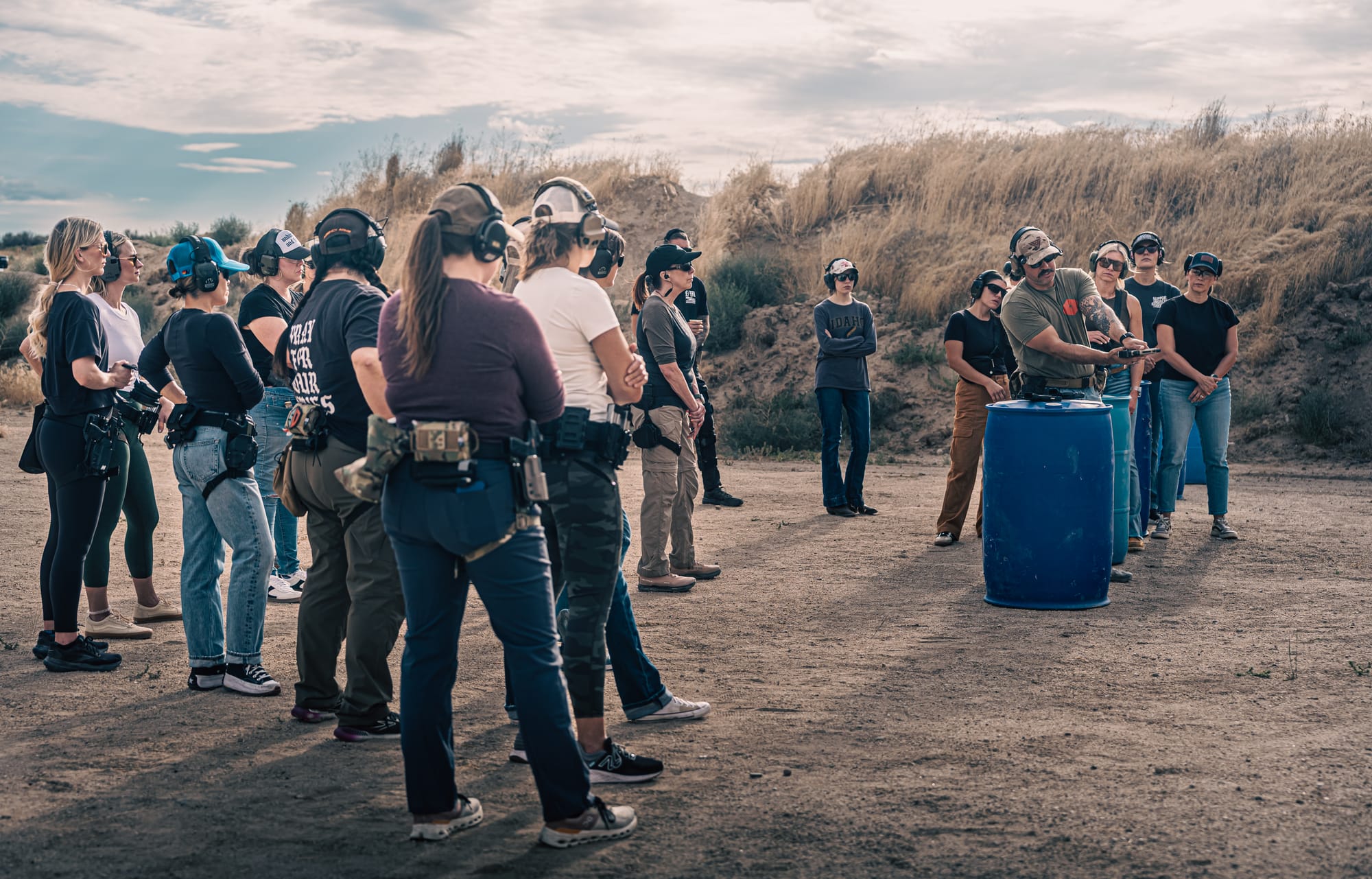
Developing efficient movement requires more than simply running between two shooting positions. We want students experiencing a variety of movement paths, angles, and distances that challenge their ability to accelerate, decelerate, change direction, and arrive ready to solve the next problem.
Barrel towers are excellent tools for creating these challenges. By changing the starting position, direction of travel, and path between barrels, we can expose inefficiencies that might otherwise go unnoticed.
The fundamentals remain consistent regardless of the layout. Move aggressively when the opportunity allows, but recognize when to begin pedaling down as you approach the next position. Manage your momentum so you arrive balanced rather than skidding to a stop. In controlled exercises with known targets, work toward having the gun appropriately prepared early, rather than waiting until you've arrived to begin your presentation.
Just as importantly, pay attention to what happens after your feet stop. Are you taking unnecessary steps? Standing up out of a perfectly usable athletic position? Rebuilding your grip or shooting platform before engaging?
These are the inefficiencies we're looking to eliminate.
One exercise we particularly like using with our students at VFT is the T-Drill from In Extremis Performance. Its layout provides opportunities to work through different movement directions, manage speed between positions, and apply the fundamentals of efficient arrivals.
The goal isn't simply to complete the drill faster. It's to identify where time is being wasted and develop the ability to move aggressively while arriving balanced, prepared, and ready to work.
Move fast when you can. Pedal down when you need to. Arrive ready.
The Bigger Picture
Throughout this series, we've continued building on the same foundational skills.
Grip allows us to control the gun. Trigger control helps us make the shot without unnecessarily disturbing it. Vision allows us to recognize and process shooting problems, while cadence and movement teach us to apply those fundamentals at increasingly demanding speeds.
Position work brings those concepts together by challenging us to think beyond the individual shot.
Where are we going? How efficiently can we get there? Are we prepared when we arrive? And have we positioned ourselves to handle whatever comes next?
We want to become faster shooters, and that will never change. But speed isn't only about how quickly we can perform individual actions. It's also about eliminating unnecessary movements and delays between those actions.
Sometimes the greatest improvement comes from simply being prepared sooner.
In the next article, we'll bring the entire Fundamentals Series together, revisiting the principles that have guided us from our first discussion of grip through the increasingly complex demands of practical and defensive shooting.
Until then, keep challenging yourself to become faster, but pay just as much attention to the opportunities to become more efficient.
That takes reps.
Ammo Squared makes it easy to keep your ammunition supply ready so you can spend more time developing your skills and less time worrying about preparing for your next range day.
Stack your ammo. Train with intent. Repeat the process.