
Caliber of the Month: .30 Super Carry
Explore the .30 Super Carry cartridge, its design, concealed carry advantages, magazine capacity, firearm options, and how it compares to traditional handgun calibers.

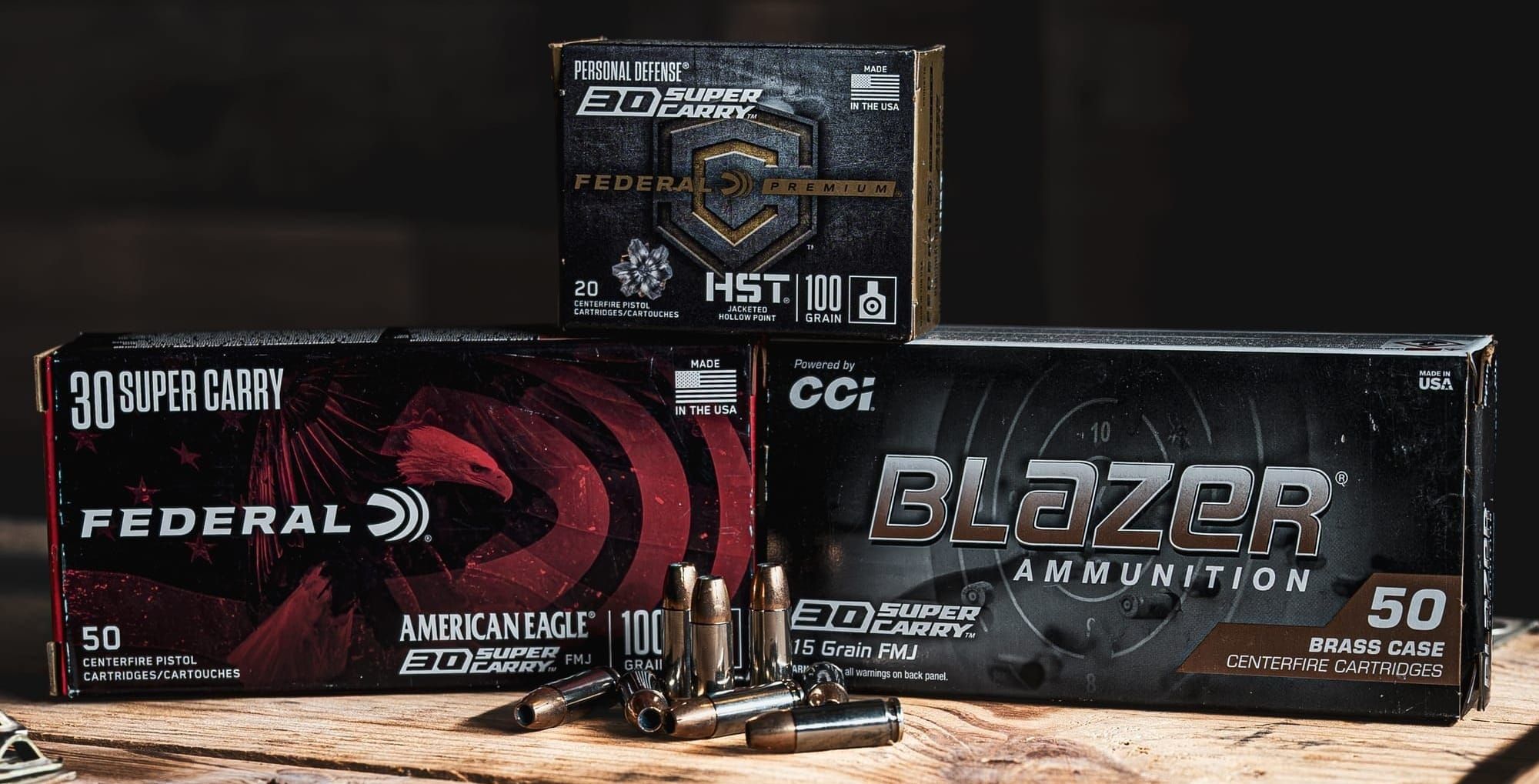
The concealed carry market has evolved considerably over the past decade, with manufacturers continually looking for ways to improve the performance of defensive handgun ammunition. One of the biggest challenges is finding the right balance between terminal performance and magazine capacity, particularly in smaller, more easily concealed pistols.
Introduced by Federal Premium in 2022, the .30 Super Carry is one of the more interesting and successful attempts to push those boundaries. Built around a high-velocity projectile, the cartridge brings a different approach to defensive handgun performance, challenging some long-held assumptions about what a compact carry cartridge can offer.
Let's take a closer look.
In a Nutshell
At its core, .30 Super Carry is a purpose-designed, straight-wall, rimless centerfire pistol cartridge.
It fires a relatively narrow .312-inch-diameter projectile, with factory ammunition generally available in bullet weights ranging from 90 to 115 grains. Depending on the load, muzzle velocities typically fall somewhere between 1,100 and 1,250 feet per second, falling closely in line with conventional 9mm Luger loads.
But the appeal of .30 Super Carry isn't necessarily found in those numbers alone.
One of the biggest considerations for anyone carrying a concealed pistol is finding the right balance between size, capacity, and shootability. A smaller handgun is generally easier to conceal, but reduced dimensions have historically translated to more anemic magazine capacities with snappier performance and poor ergonomics.
Ruger LCP, anyone?
The .30 Super Carry was developed to help address some of those compromises.
Its smaller-diameter case allows for increased magazine capacities without necessarily increasing the overall size and profile of the handgun.
Put simply, the cartridge maximizes your capacity potential without sacrificing concealment.
Which, to most shooters, is kind of the name of the game.
Earning Its Place
By the time .30 Super Carry hit the market, concealed carry was already a major driving force in handgun development. Shooters wanted smaller, lighter pistols that were easier to carry throughout the day without giving up the capacity and performance they expected from a defensive handgun.
Turns out, that's easier said than done.
There's only so much room in a compact pistol. Make the grip smaller and you sacrifice ergonomics and handling. Increase magazine capacity and you may end up with a wider grip or a larger firearm that's more difficult to conceal. It's a balancing act, and manufacturers have spent years trying to find that sweet spot.
Smith & Wesson was among the first of the big name players within the industry to embrace the cartridge, introducing a version of the M&P Shield Plus chambered in .30 Super Carry, giving the newly minted round a recognizable, purpose-built handgun from an established manufacturer and cementing its potential in an already crowded ammo market.
And that success matters.
A new cartridge can look great on paper, but support from major manufacturers ultimately determines whether it has a realistic shot at gaining traction. Shooters need handguns they actually want to carry, and they need to know they can find ammunition to feed them.
The Shield Plus gave .30 Super Carry a legitimate foothold in the concealed carry market, putting its primary selling point front and center: more ammunition capacity in a compact defensive handgun.
Is .30 Super Carry Here to Stay?
The concept behind .30 Super Carry is easy enough to understand, and the potential advantages for concealed carry are real. But a cartridge's long-term success depends on more than its original engineering.
It needs continued ammunition production, a healthy selection of compatible firearms, and enough consumer demand to keep manufacturers interested.
At present, .30 Super Carry doesn't have the enormous catalog of firearms and ammunition available to some of the older, more common cartridges like the 9mm Luger or .40 S&W.
That's worth considering.
If you're someone who likes having a dozen ammunition manufacturers and a wide selection of handgun platforms to choose from, the current market may feel a little restrictive.
On the other hand, limited selection doesn't make a cartridge ineffective or impractical. Not at all.
For someone who finds a handgun they shoot well, appreciates the capacity benefits, and can reliably source the ammunition they prefer, .30 Super Carry makes a perfectly reasonable concealed-carry proposition.
It's a specialized cartridge with a clearly defined purpose. Done and done.
Keep Your Defensive Supply Stocked
If you're already enjoying .30 Super Carry for everyday carry, keeping a healthy supply of ammunition on hand is an absolute must. Especially these days.
As with any defensive handgun, you need regular range time to keep your fundamentals sharp and make sure your chosen ammunition continues to function as expected. That's a lot easier to do when you have a dependable ammo reserve.
The rounds you keep for personal protection shouldn't be the same box you repeatedly dip into for routine practice.
With a cartridge that has a more specialized market, like the .30 Super Carry, finding your preferred loads on the shelf isn't always a guarantee. Waiting until you're down to your last box before thinking about a restock isn't a particularly good strategy.
AmmoSquared can help. Rather than making ammunition purchases whenever you happen to remember you're running low, you can build your supply gradually. Set your budget, choose the calibers you want to stock, and let your reserve grow over time.
Whether you're keeping a dedicated supply of .30 Super Carry for everyday carry or adding another caliber to an existing stockpile, a little planning goes a long way. Because the best time to think about your next ammunition purchase is probably before you need it.
The Bottom Line
Federal took a different approach with .30 Super Carry. Rather than simply introducing another defensive load, the company developed a cartridge around one of the practical challenges of concealed carry: maximizing defensive performance and carry capacity in a compact handgun.
The result is a purpose-built cartridge with some thoughtful engineering behind it. Its narrower profile gives firearm manufacturers more flexibility with magazine design, while modern defensive loads offer the bullet construction and performance characteristics expected of personal protection ammunition.
There are trade-offs. Firearm selection and ammo availability aren't as commonplace and readily accessible as they are for staple cartridges like 9mm Luger. And as with any cartridge, it’s not for everyone.
That said, .30 Super Carry has a legitimate place in the concealed-carry conversation, and for the right shooter, it’s a pretty solid option.
Just remember: the best defensive handgun is the one you can carry consistently, operate confidently, and put in the work to shoot well.
And it helps to have enough ammunition stocked, warehoused, and ready to go when you need it.
Be sure to sign in to your AmmoSquared account today, as it will only be available for the month of December.