
Position: See Sooner, Not Just Faster
Getting faster doesn’t always mean shooting or moving faster. In Part 9 of our Fundamentals Series, we look at how positioning, angles, and working farther off a corner can help you see and solve the shooting problem sooner.
Fundamentals Series — Part 9
In the last two articles, we've taken our fundamentals off the static firing line and started moving. We've discussed why movement belongs early in a shooter's development, how to move without unnecessarily disrupting the gun, and how to control our pace based on the shooting problem in front of us.
Now we need to talk about where that movement takes us.
At Valiance Firearms Training (VFT), we spend a lot of time encouraging students to become faster shooters. Speed matters. We want to build the grip, trigger control, vision, and movement skills that allow us to perform faster while maintaining accountability.
But there's another way to gain speed that doesn't require us to physically perform any faster. We can do things sooner.
Shooting faster is largely a mechanical skill. Shooting sooner is often an efficiency skill. One of the easiest places to see that distinction is when working around corners and barricades.
Faster vs. Sooner
There is nothing wrong with chasing speed. We should work toward faster splits, faster transitions, faster movement, and faster processing—as long as accountability remains.
But sometimes we become so focused on physically doing things faster that we overlook opportunities to simply eliminate unnecessary work. Better vision can allow us to identify the next problem sooner. Better movement can allow us to begin solving that problem sooner. And better positioning can allow us to see what we need to see sooner.
Sometimes the fastest way to solve a problem is simply to see it sooner.
That's where understanding angles becomes important.
The Problem We Commonly See
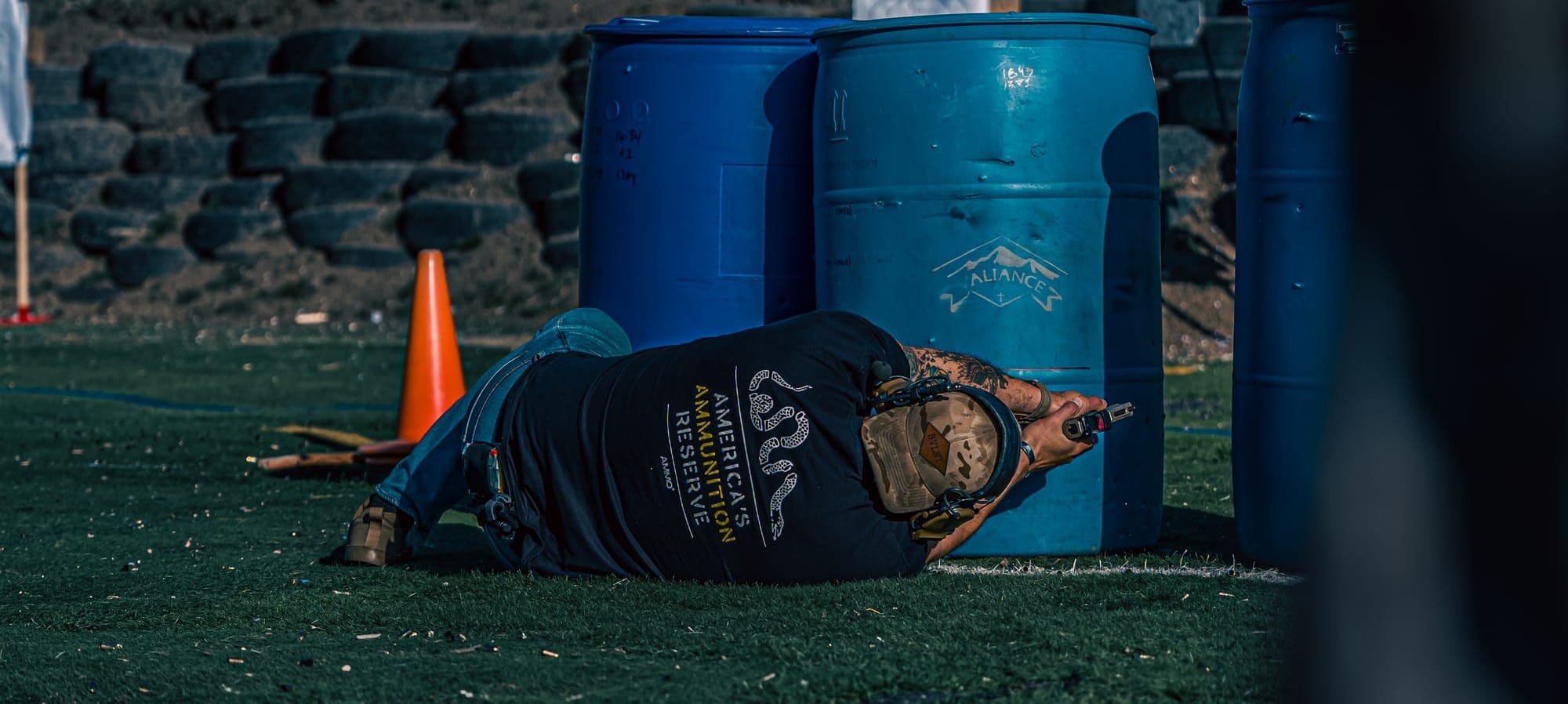
Give a shooter a barricade with a target somewhere around the other side and there's a natural tendency to move directly toward the corner. They crowd it, then begin working laterally around the edge until they can see enough of the target to engage it.
The shooter may be moving quickly. They may be technically performing everything well. But they may have created a less efficient problem simply because of where they chose to stand.
At VFT, we want students to begin thinking about the geometry of the position before they ever reach the corner. Sometimes a step backward gives you more than a step forward.
The Tip: Back Off the Corner
One of the simplest lessons we teach around barricades is not to automatically crowd your cover. Whenever the situation allows it, creating distance between yourself and the corner can give you a much more advantageous angle.
Imagine standing immediately next to the edge of a wall. To see farther around that wall, you may have to move a significant portion of your body laterally beyond the edge. Now back several feet away from that same wall.
The wall hasn't changed, and what's beyond it hasn't changed. You changed the geometry.
From farther back, relatively small changes in your position can begin opening up your view beyond the corner. Instead of wrapping yourself around the edge to gain information, you can progressively work the angle and allow your vision to pick up what's beyond it sooner.
You didn't move faster or shoot faster. You created an opportunity to see sooner.
Geometry Works Both Ways
But seeing sooner is only half of the advantage. We also need to think about what's happening from the other perspective. The geometry works both ways.
As we're gaining vision beyond a corner, we also need to consider how much of ourselves we're presenting to whatever may be on the other side. Crowding a corner can require more of your body to move beyond the edge before you gain the visual information you need. Creating distance can allow you to work the angle more deliberately while minimizing how much of yourself you present in return.
That distinction becomes particularly important when we take these skills from practical shooting into a defensive context. We're not simply trying to see sooner; we're trying to gain information while giving away as little as possible.
See sooner. Present less.
Cover and Concealment
In defensive shooting, we also need to understand what we're actually positioning ourselves behind.
Cover is something capable of providing meaningful protection from incoming fire. Concealment primarily limits observation. It may prevent someone from seeing you without providing reliable ballistic protection.
The distinction matters. A substantial structural object may provide some degree of cover, while something like a curtain or light interior material may conceal your location while doing very little to protect you from incoming rounds. Many real-world objects fall somewhere between those extremes, and their ability to stop a projectile can vary considerably based on construction, ammunition, angle, and other factors.
So we shouldn't automatically assume that because we can't see through something, it will protect us. Don't confuse being hidden with being protected.
Whether we're working with cover or concealment, however, the positional lesson remains valuable. Understand the angles, use distance when it gives you an advantage, and gain the information you need while minimizing unnecessary exposure.
Distance Creates Options
This is ultimately why we want students thinking about distance from the corner. Distance gives us room to work.
It can change what becomes visible and when it becomes visible. It can change how much lateral movement is necessary to gain that information. And in a defensive context, it can change how much of ourselves we present while gathering it.
That doesn't mean farther away is always better. Practical and defensive shooting problems are rarely solved by absolute rules. The environment, available space, target location, type of cover or concealment, and what you're trying to accomplish all matter.
The lesson is simpler: don't crowd a corner just because the corner is there. Recognize that your position relative to it changes the problem. Sometimes creating a little more distance can create a much greater advantage.
Drill Highlight: Work the Angle
This drill is more demonstration than speed exercise.
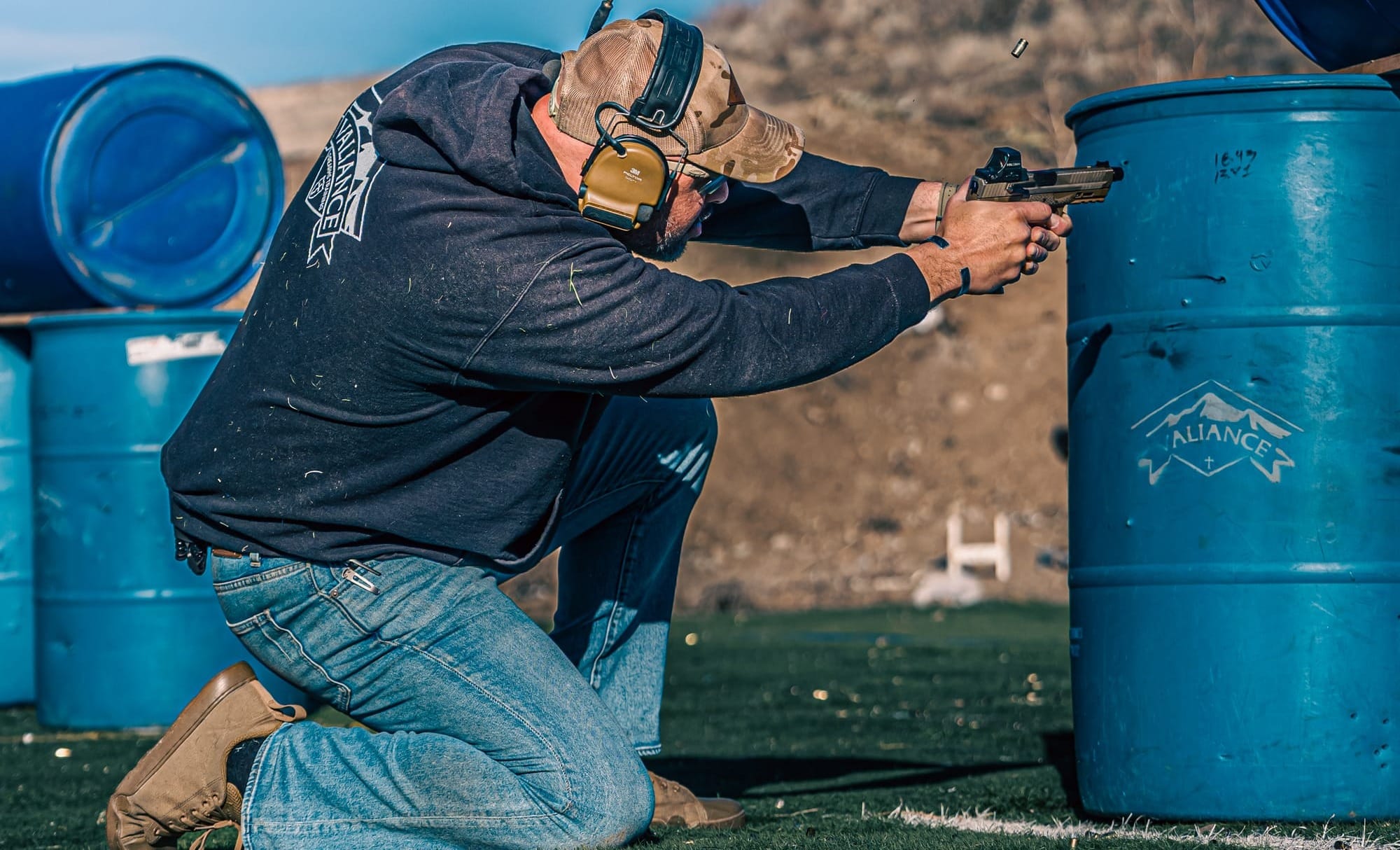
Place a barricade between you and a target positioned beyond one side. Start close to the barricade and safely work laterally until the target becomes visible. Pay attention to how far you have to move to gain useful vision. Then reset several feet farther away and work the same angle again.
Compare the two positions. Don't worry about the timer initially. The purpose isn't to prove that you can move around the barricade faster; it's to recognize that better positioning may allow you to solve the same problem sooner.
The shooter didn't suddenly become faster between repetitions. The problem became more efficient.
The Bigger Picture
We spend a lot of time trying to become faster shooters, and we should. We should chase faster shooting while continuing to demand accountability. But don't become so focused on doing things faster that you overlook opportunities to do things sooner.
Better vision, better movement, better positioning, and better angles can all remove unnecessary time without requiring you to physically perform any faster. That's one of the larger lessons we've been building toward throughout this series: speed matters, but efficiency creates speed.
In the next article, we'll continue building on position work by looking at what happens when we actually arrive at that corner: preparing the gun before we need it, entering positions ready to shoot, and maintaining a dynamic position that allows us to leave just as efficiently as we arrived.
For now, start paying attention to the geometry. Back off the corner, see sooner, and present less.
Then do it again. That takes reps.
Ammo Squared makes it easy to keep your supply ready so those reps are there when you need them.
Stack your ammo.
Train with intent.
Repeat the process.